
Burmese Golden Pearls: A Guide to Myanmar Golden South Sea Pearls
Burmese golden pearls are rare Gold South Sea pearls associated with Myanmar’s Mergui Archipelago. This guide explains their origin, natural gold color, value factors, and what buyers should check before choosing one.
Burmese golden pearls trace their cultured-pearl history back to 1954. Combined with the Myanmar government’s strict control over its pearl-farming waters, this history has helped shape the high quality associated with these pearls. Compared with other origins, Myanmar’s waters in the Andaman Sea are known for higher copper-ion content and consistently clean, unpolluted conditions.
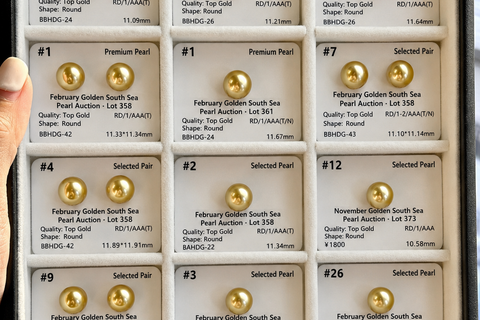
This environment gives Burmese golden pearls their distinctive warm golden tone: rich in color without looking heavy or dull. They often show unique pink-green or reddish overtones, creating a translucent glow that many ordinary golden pearls with a stronger metallic look do not have.
That low visibility is part of their appeal. Burmese golden pearls are associated with Myanmar's southern coast, especially the Myeik Archipelago in the Andaman Sea. GIA has documented pearl farming in this region, including the cultivation of gold-lipped Pinctada maxima oysters, the species associated with Golden South Sea cultured pearls.
When quality and documentation align, Burmese golden pearls can show a refined natural gold, from warm champagne to deeper saturated tones. Origin alone does not make a pearl valuable, but Burmese golden pearls deserve more attention when their luster, color, surface, shape, and provenance support the story.

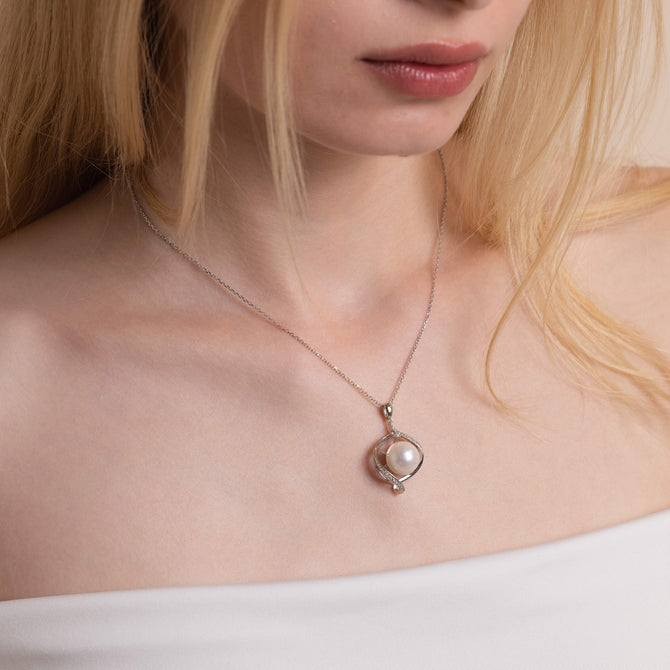
If you want to understand the look before investing in a larger piece, a Golden South Sea pearl pendant is an approachable starting point.
What Are Burmese Golden Pearls?
Burmese golden pearls are Golden South Sea cultured pearls associated with Myanmar, formerly Burma. They are grown in saltwater Pinctada maxima oysters, especially the gold-lipped variety also used in Golden South Sea pearl production in Indonesia and the Philippines.
This distinction matters because not every golden pearl belongs to the same category. Some freshwater pearls are dyed or treated to imitate a golden tone. Some South Sea pearls are naturally light champagne rather than deep gold. A pearl can be beautiful in any category, but the buyer should know what type of pearl they are comparing.

The region's credibility is also reflected in the presence of major pearl houses. TASAKI, one of Japan's best-known pearl companies, has operated pearl farming activities in Myanmar, which further supports the country's role in high-quality South Sea pearl cultivation. For buyers, this does not mean every Burmese golden pearl is automatically superior, but it does show that Myanmar's waters have long been taken seriously by professional pearl producers.
Myanmar's Myeik Archipelago gives Burmese pearls their origin story. The South Sea Pearl's overview of pearls from Myanmar describes Myanmar as one of the smaller South Sea pearl-producing origins, with cultivation centered around the Myeik Archipelago. That limited scale adds appeal, but it should not replace quality grading.
Why Burmese Golden Pearls Are Often Overlooked
Myanmar's pearl industry has historically been less visible to Western consumers. Philippine and Indonesian Golden South Sea pearls are more common in retail because their supply and branding are more widely seen.
Supply is another reason. South Sea pearls are slower and more costly to produce than many freshwater pearls. A well-matched strand can take years to assemble because size, color, luster, shape, and surface quality all need to work together. With Burmese production remaining comparatively small, these pearls often stay better known among dealers and collectors than among everyday shoppers.
There is also confusion around the phrase "golden pearl." Shoppers may see dyed freshwater pearls, treated pearls, champagne-toned pearls, and natural Golden South Sea pearls described in similar language. A true Golden South Sea pearl from Pinctada maxima belongs to a different biological and market category than a treated freshwater pearl with gold color.
Natural Gold Color Is Not One Shade
One common misunderstanding is that deeper gold is always better. Deep gold can be highly desirable when the color is natural, even, and paired with strong luster. But Golden South Sea pearls exist across a range: light gold, champagne, creamy gold, pure gold, and deeper 24k-style tones.

The best choice depends on skin tone, jewelry design, budget, and personal preference. A darker pearl with dull luster may look flat, while a lighter pearl with sharp reflection can feel much more alive. In fine pearl buying, luster is what makes a pearl glow rather than simply look colored.
Documentation also matters. The IGC study on Myanmar golden-lipped cultured pearls discusses gemological testing methods such as X-ray radiography, EDXRF, UV-Vis-NIR, and Raman spectroscopy. Buyers do not need to perform these tests personally, but they should understand that serious pearl identification is not guesswork.
Burmese Golden Pearls vs Other Golden South Sea Pearls
Golden South Sea pearls from Indonesia and the Philippines are more familiar in today's retail market. They can be exceptional, especially in rich saturated gold. Burmese golden pearls feel more specialized because they are less frequently discussed and more closely tied to the Myeik origin story.
That does not mean Burmese pearls are automatically more valuable. Origin is only one factor. A top-quality Philippine or Indonesian pearl can easily outrank an average Burmese pearl. The better question is whether the specific pearl has the luster, color, surface, shape, size, and documentation to justify its price.
For comparison, a loose Golden South Sea pearl lets you study color, luster, surface, and shape before choosing a setting. A Golden South Sea pearl necklace shows why matching matters across an entire strand.
Buyer Checklist
- Ask for the pearl type. The useful phrase is Golden South Sea cultured pearl from Pinctada maxima, not simply "golden pearl."
- Clarify origin. If the seller says Burmese or Myanmar origin, ask how that origin is documented.
- Check color claims. Golden color can be natural in South Sea pearls, but dyed and treated pearls also exist.
- Prioritize luster. A smaller pearl with better luster can look more luxurious than a larger dull pearl.
- Match the pearl to the design. Deep gold feels dramatic, while champagne and light gold may be easier for daily wear.
FAQ
Are Burmese golden pearls real Golden South Sea pearls?
Yes, when properly identified. Burmese golden pearls are generally understood as Golden South Sea cultured pearls associated with Myanmar and grown in Pinctada maxima oysters. Golden color alone is not enough; disclosure and documentation matter.
Are Burmese golden pearls better than Philippine golden pearls?
Not automatically. Burmese origin can be interesting and collectible, but quality depends on the individual pearl. Luster, color, surface, shape, size, matching, and treatment disclosure matter more than origin alone.
Why are Burmese golden pearls less common in stores?
Myanmar's pearl story is less heavily marketed to consumers, and production is smaller than major Golden South Sea pearl origins. Many Burmese pearls move through trade channels where certificates and supplier documentation matter more than consumer-facing branding.
How can I avoid buying a dyed imitation?
Ask whether the pearl is freshwater or saltwater, whether it is Golden South Sea from Pinctada maxima, whether the color is natural or treated, and whether documentation is available for higher-value purchases.
CTA
A golden pearl should be chosen for verified beauty, not just a romantic origin name. If you want a pendant, ring, earrings, or a custom piece designed around the right tone of gold, explore De Blancas Custom Pearl Jewelry and let our team help match pearl quality, design, and budget with clarity.


