
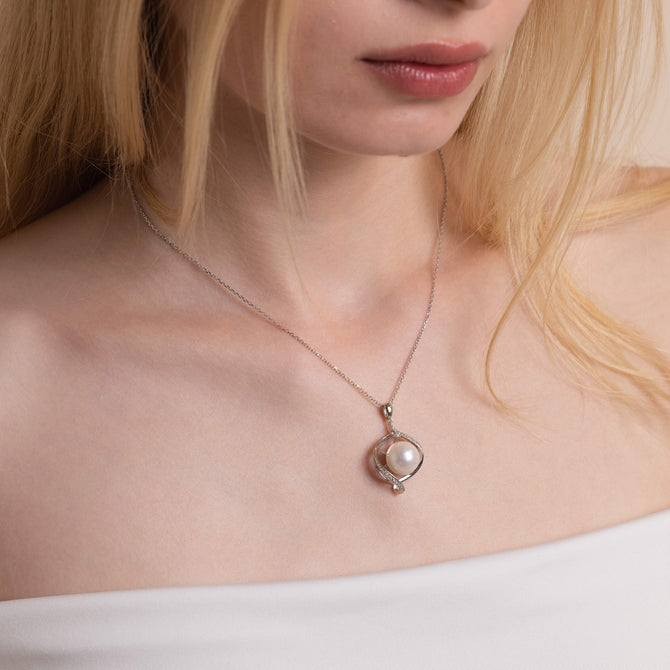



Pearl Surface
Akoya pearls naturally form with small surface marks. Higher-grade pearls have cleaner surfaces with fewer visible blemishes, while lower grades may show more natural spots, marks, or texture.

CULTURED PEARLS · TIMELESS LUSTER
Explore natural-color Akoya pearl earrings and necklaces in luminous white, silver and blue, from classic studs and full strands to delicate tincup designs.
Discover the collection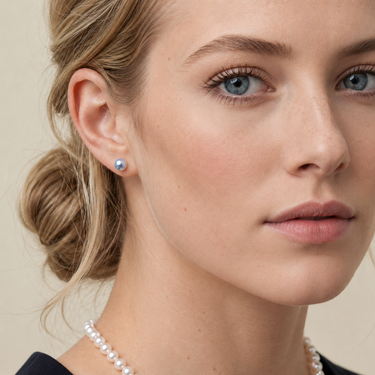


Explore the 5 key factors that define the beauty, quality, and value of Akoya pearls.
Akoya pearls naturally form with small surface marks. Higher-grade pearls have cleaner surfaces with fewer visible blemishes, while lower grades may show more natural spots, marks, or texture.


Luster describes the brightness and sharpness of reflections on a pearl. High-quality Akoya pearls show bright, well-defined reflections; softer reflections give a more muted appearance.


Akoya pearls range from white (with pink overtone) and silver to light blue, gold overtones. Rarity, balance, and richness all influence value.


Akoya pearls are predominantly round, with baroque (irregular) shapes being relatively uncommon.
Akoya pearls typically range from 6 to 8.5 mm, with 7–8 mm being the most common and versatile size for everyday wear. Smaller pearls have a more delicate look, while larger sizes offer greater visual impact and usually command higher prices.
Akoya pearls are saltwater cultured pearls. The term “freshwater Akoya” is sometimes used to describe bead-nucleated freshwater pearls that resemble Akoya pearls in shape and luster, but they are a different pearl type.
These freshwater pearls can still be genuine and beautiful; the important thing is that they are clearly identified and priced as freshwater pearls. Before buying, ask the seller whether the pearls are freshwater or saltwater and review the product details or available documentation.
Learn more about what “freshwater Akoya” really means.
Akoya pearls are valued for their bright luster and classic appearance. Prices vary with pearl size, luster, surface quality, shape and matching, as well as the metal and design of the finished piece.
When comparing an Akoya necklace or pair of earrings with freshwater pearl jewelry, compare the actual pearls rather than price or pearl type alone. For a classic strand, look closely at how consistently the pearls match in size, color and luster; for studs, compare the two pearls as a pair. Whether the premium is worthwhile depends on the quality you can see, the style you prefer and your budget.
In DE BLANCAS's Akoya grading system, AAAA pearls have ultra-high luster, a very clean surface and a very round shape. They are classified as having thicker nacre and excellent matching.
AAA pearls have high luster, light natural surface characteristics and a round shape. They are classified as having medium nacre and very good matching.
Grading standards can vary between sellers.
Akoya pearls come in a range of colors, from classic white to silver, blue, and creamy golden tones. White Akoya pearls may also display a subtle pink or silver overtone, adding depth to their appearance.
All pearls at DE BLANCAS are naturally colored. Their shades and overtones can look different depending on the lighting and the colors worn nearby.
Pearl grading standards vary from one seller to another, so an AAA or AAAA grade may not mean exactly the same thing everywhere. Look closely at luster, surface quality, roundness, nacre and how well the pearls are matched.
At DE BLANCAS, we assess our pearls using quality factors similar to those considered by established pearl retailers such as The Pearl Source and Pearl Paradise. Every piece of pearl jewelry is visually inspected and comes with its own unique DE BLANCAS certificate. This is our own documentation, separate from an independent laboratory report.
If your budget allows, you may also consider pearls accompanied by an independent certificate from Japan’s Pearl Science Laboratory (PSL). Certified pearls are usually more expensive, but the independent assessment can add confidence—especially when purchasing a high-quality Akoya pearl strand.
Both are real cultured pearls. Akoya pearls are cultured in saltwater and are known for bright luster and a classic appearance. Freshwater pearls offer a broad range of colors, shapes and price points. Choose based on the look, size and budget that suit you. Read our Akoya and freshwater comparison.
Smaller pearls create a more delicate look, while larger pearls make a stronger statement. Sizes around 7–8 mm are a versatile starting point; compare the measurements on each pair of earrings or necklace with jewelry you already wear. Personal style, setting and necklace length also affect the overall look.
Your cart is currently empty.
Start Shopping