
Purple Tahitian Pearls vs Purple Freshwater Pearls
Purple Tahitian pearls and purple freshwater pearls can look similar online, but their color source, luster, stability, rarity, and value are very different. Learn how to compare them before buying.
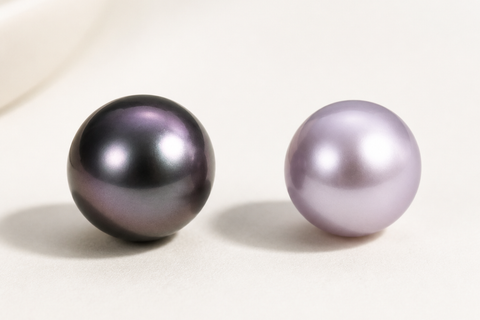
Purple pearls can look similar in a product photo, but purple Tahitian pearls and purple freshwater pearls belong to very different pearl categories. One is a saltwater pearl known for black body color and purple overtone. The other is usually a freshwater pearl with lavender or purple body color. Both can be beautiful, but they should not be priced, described, or compared as if they were the same.
The difference matters because color source affects stability, luster, rarity, and value. A purple Tahitian pearl is typically a Tahitian pearl with a purple or eggplant overtone floating over a darker base. A purple freshwater pearl is often lavender, mauve, or pink-purple throughout the pearl body, as seen in pieces such as a lavender purple freshwater pearl necklace.
This guide explains the practical differences a buyer should know: overtone versus body color, fading risk, luster, price, and the common problem of freshwater pearls being marketed as Tahitian pearls.
The Short Answer
Purple Tahitian pearls are saltwater cultured pearls grown in the black-lipped pearl oyster, Pinctada margaritifera. Their purple appearance is usually an overtone or orient over a darker gray, black, green, or aubergine body color. GIA notes that pearls from Pinctada margaritifera can show dramatic overtones, including green, pink, purple, and combinations such as peacock or aubergine.
Purple freshwater pearls are freshwater cultured pearls, usually grown in freshwater mussels. Their purple appearance is more often the pearl's body color, especially in lavender, mauve, plum, or pink-purple tones. Some are naturally colored. Others may be dyed or color enhanced, which makes disclosure especially important.
In general, Tahitian pearls have stronger visual depth, more metallic luster, and better color stability. Purple freshwater pearls are more accessible, softer in look, and usually more affordable. The right choice depends on the look you want and whether the seller is describing the pearl honestly.
Overtone vs Body Color
The biggest difference is how the purple color appears. In a purple Tahitian pearl, purple is usually an overtone: a secondary color that seems to float over the pearl's darker body color. The pearl may look charcoal, green-gray, peacock, or eggplant from one angle, then flash violet or reddish purple as it turns in the light.

In a purple freshwater pearl, the purple is usually the body color itself. The whole pearl may appear lavender, mauve, lilac, or plum. This gives freshwater pearls a softer and more romantic look, but it does not create the same dark optical depth that collectors often associate with fine Tahitian pearls.
GIA's pearl description guide separates bodycolor from overtone and orient, which is useful for shoppers. Bodycolor is the main color of the pearl. Overtone is an additional color modifying that main color. Orient is the iridescent effect that can appear across the nacre surface. Once you understand those terms, purple pearl listings become easier to judge.

Will Purple Pearls Fade?
This is where the difference becomes very practical. A purple Tahitian pearl's purple effect is normally part of its natural nacre structure and optical character. With normal pearl care, it should not fade in the same way a dyed surface color can fade.
Purple freshwater pearls are more complicated. Some lavender freshwater pearls are naturally colored and stable. Others are dyed or color enhanced. GIA's FAQ on brightly colored pearls notes that pearl colors can be treated and that dyeing is more common with freshwater pearls than saltwater pearls. Treated purple freshwater pearls may change over time, especially with strong light exposure, perfume, harsh cleaning agents, sweat, or repeated chemical contact.

There is also a more technical point: some purple tones in freshwater pearls may be linked to trace elements and color centers, including manganese-related coloration. When the color is unstable, long-term wear and environment can affect how the purple tone holds. A buyer does not need to become a chemist, but they should ask one simple question: is the color natural, dyed, or enhanced?
Luster: Why Tahitian Pearls Often Look Deeper
Usually, Tahitian pearls show stronger luster and deeper visual contrast than ordinary purple freshwater pearls. The dark body color of a Tahitian pearl makes the purple overtone appear more dimensional, almost metallic. That is why purple Tahitian pearls can look dramatic even in simple designs.
Freshwater pearls can also have beautiful luster, especially high-grade bead-nucleated freshwater pearls. But the visual effect is often softer. A lavender freshwater pearl usually glows gently rather than reflecting with the same dark mirror-like intensity.
This does not mean every Tahitian pearl is better than every freshwater pearl. A dull Tahitian pearl is still dull. A high-luster freshwater pearl can be very elegant. But when the comparison is between similar quality levels, purple Tahitian pearls usually carry more depth, stronger contrast, and a more collector-oriented look.
Mislabeling Risk: Freshwater Sold as Tahitian
One of the most common problems in purple pearl shopping is mislabeling. Some sellers use purple freshwater pearls to imitate the look of purple Tahitian pearls. You may see phrases like Tahitian color, Tahitian-style purple pearl, black freshwater Tahitian look, or natural purple Tahitian at a price that makes little sense.
A uniform lavender pearl should not automatically be described as Tahitian. A Tahitian pearl usually has a darker body color with overtone, not a flat pastel-purple body color. If a listing shows a soft lavender strand but calls it Tahitian, ask for the pearl type, mollusk, origin, and treatment disclosure before comparing price.
This is especially important online, where lighting and filters can flatten the difference. A purple freshwater pearl can look deeper under strong lighting, and a lower-grade Tahitian pearl can look dull in poor photography. Documentation and clear seller language matter more than a romantic color name.
Purple Tahitian Pearls vs Purple Freshwater Pearls
| Feature | Purple Tahitian Pearl | Purple Freshwater Pearl |
|---|---|---|
| Pearl type | Saltwater cultured pearl | Freshwater cultured pearl |
| Mollusk | Pinctada margaritifera | Freshwater mussel |
| Purple appearance | Usually overtone or orient | Usually body color |
| Typical look | Dark, metallic, aubergine, peacock, violet flash | Lavender, mauve, lilac, plum, pink-purple |
| Color stability | Usually stable with normal care | Varies; dyed or enhanced pearls may fade |
| Luster | Often stronger and deeper | Usually softer, though high-grade pieces can be bright |
| Price | Usually higher | Usually more accessible |
| Main shopping risk | Overpaying for weak luster or poor surface | Buying dyed freshwater pearls mislabeled as Tahitian |
Which One Should You Choose?
Choose purple Tahitian pearls if you want a bolder, darker, more dramatic pearl with stronger luster and a saltwater origin. They are especially good for statement pendants, collector strands, cocktail rings, and designs where the pearl should be the visual center. A piece such as a Tahitian pearl necklace shows why matching overtone, body color, and luster across multiple pearls is difficult and valuable.
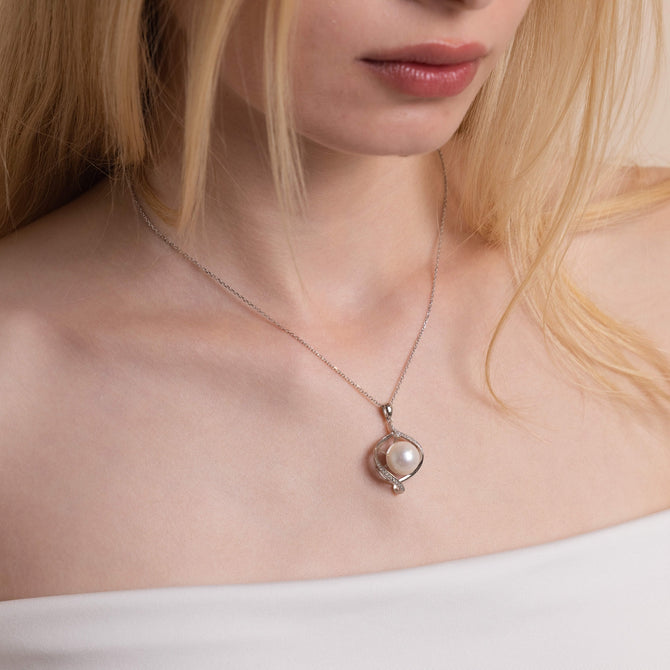
Choose purple freshwater pearls if you prefer a softer lavender or mauve tone, a more romantic everyday look, or a friendlier price point. Freshwater pearls are useful for gifts, casual jewelry, and larger designs where budget flexibility matters. For example, freshwater pearl teardrop earrings can offer a gentle purple option without the price of fine Tahitian pearls.
Neither choice is automatically right or wrong. The problem begins only when one category is sold as the other. A freshwater pearl should be priced and described as freshwater. A Tahitian pearl should be clearly identified as saltwater, with appropriate origin and treatment disclosure.

Buyer Checklist
- Ask freshwater or saltwater. This is the first category distinction.
- Ask for the mollusk. Tahitian pearls should be associated with Pinctada margaritifera.
- Ask body color or overtone. Purple Tahitian pearls usually show purple as overtone; purple freshwater pearls are usually purple in body color.
- Ask natural, dyed, or enhanced. This is especially important for bright purple freshwater pearls.
- Compare luster before color name. A pearl with weak luster will not look luxurious just because the color sounds rare.
- Use documentation for higher-value purchases. A lab report or clear supplier documentation is worth asking for when origin and treatment affect price.
FAQ
Do purple freshwater pearls fade?
Some can, especially dyed or color-enhanced pearls. Natural lavender freshwater pearls may be more stable, but color can still be affected by light, chemicals, and care conditions. Ask the seller whether the color is natural, dyed, or enhanced.
Do purple Tahitian pearls fade?
Under normal care, purple overtones in Tahitian pearls are generally stable because they are part of the pearl's nacre and optical character, not a surface dye. Pearls should still be protected from perfume, harsh cleaners, and prolonged direct sunlight.
How can I tell if a purple pearl is Tahitian?
Look for a darker body color with purple overtone rather than a flat lavender body color. Then ask for saltwater origin, Pinctada margaritifera disclosure, and documentation for higher-value pieces.
Are purple Tahitian pearls more valuable?
Usually yes, especially when the purple overtone is strong, the luster is high, the surface is clean, and the shape is desirable. But quality still matters more than the name alone.
CTA
Buy purple pearls by verified category, not just by color name. De Blancas clearly separates pearl type, origin, and quality so you can compare Tahitian and freshwater pearls honestly. For a custom design built around the exact purple tone you want, explore De Blancas Custom Pearl Jewelry.


