
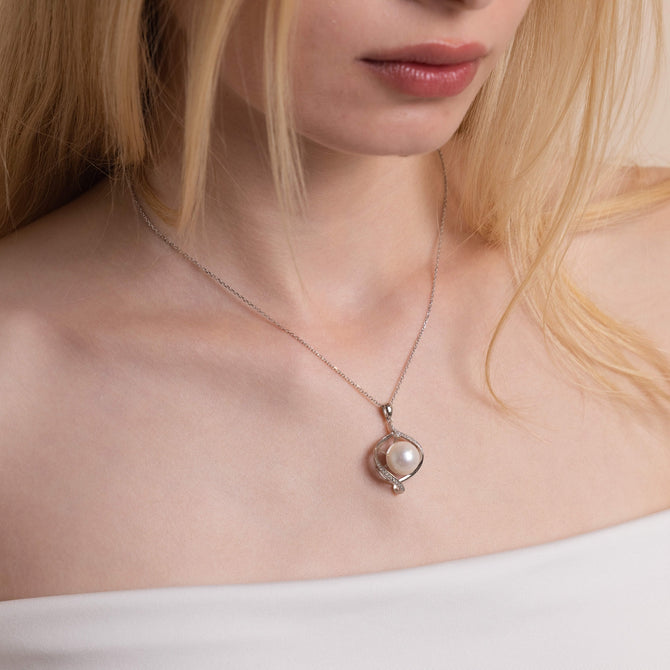

A pearl necklace can look beautiful in a photo, then feel completely different in person. That is where the question of real pearls vs faux matters most. If you are buying for a wedding, a milestone gift, or a piece you plan to wear for years, the difference is not just visual. It affects value, longevity, feel, and the kind of elegance the jewelry carries over time.
Faux pearls have their place. They can be stylish, affordable, and useful for trend-driven fashion. But if you are shopping for fine jewelry, real pearls offer something imitation materials rarely capture - depth, nuance, and a natural glow that feels unmistakably refined.
Real pearls vs faux: what actually sets them apart
At the simplest level, real pearls are organic gems formed inside mollusks, either naturally or through cultured pearl farming. Faux pearls are man-made beads, usually glass, plastic, or shell, coated to imitate the look of nacre.
That distinction shapes everything else. Real pearls develop layer by layer, which gives them their luster, surface character, and subtle variations in shape and tone. Faux pearls are manufactured to appear uniform. They often look smooth and glossy at first glance, but the finish tends to sit on the surface rather than glow from within.
For many shoppers, that is the easiest way to think about it. Real pearls have depth. Faux pearls have finish.
How real pearls look compared to faux pearls
The first clue is luster. High-quality real pearls reflect light with complexity. You may notice a bright surface reflection, but also a softer inner glow beneath it. This is what makes fine Akoya pearls look crisp and luminous, or South Sea pearls appear satiny and rich.
Faux pearls often look either too shiny or too flat. Some have an almost mirror-like coating that reads artificial, while others appear chalky under natural light. In product images, this can be easy to miss. In person, the difference becomes much clearer.
Surface is another clue. Real pearls are rarely perfectly identical. Even in a carefully matched strand, there may be tiny differences in overtone, shape, or surface markings. That is normal, and often desirable, because it reflects natural formation. Faux pearls are usually more uniform because they are molded and coated in batches.
Uniformity is not always a sign of quality. In pearls, a little individuality often signals authenticity.
The feel test: texture, temperature, and weight
If you can handle the jewelry, the physical feel tells you a great deal. Real pearls tend to feel cool when first touched, then gradually warm against the skin. Their surface also has a faintly textured feel because nacre is layered, not painted on.
One well-known method is the tooth test. When gently rubbed against the front of your teeth, real pearls usually feel slightly gritty or sandy. Faux pearls feel smoother, more like polished plastic or glass. It is a simple test, though not one to rely on alone when buying higher-value jewelry.
Weight can help too. Glass faux pearls may feel heavier than plastic versions, but many imitation strands still lack the balanced, substantial feel of well-made real pearl jewelry. The clasp and metal quality also matter here, since fine pearl pieces are typically finished with better components overall.
Drill holes reveal more than most people expect
If you are examining a strand or pair of drilled pearls closely, look at the hole area. On real pearls, the nacre should appear integrated and clean around the drill hole. On faux pearls, you may see peeling, flaking, or a thin coating around the edge where the underlying bead shows through.
This is especially useful with imitation pieces that look convincing from a distance. A glossy finish can hide a lot until you inspect the details. Any signs of coating wear near the drill holes are a strong signal that the pearls are faux.
Price matters, but it is not the whole story
Many shoppers assume price alone will tell them what they are buying. Sometimes it does. If a large strand advertised as South Sea pearls is priced like costume jewelry, that should raise questions immediately.
Still, price is only one indicator. Real pearls span a wide range depending on type, size, shape, luster, surface quality, and matching. Freshwater pearls can be more accessible than Akoya or South Sea pearls while still being genuine fine jewelry. On the other hand, some faux pearl pieces are sold at inflated prices because of branding, styling, or packaging.
A better question is whether the price aligns with the stated pearl type and overall craftsmanship. Authentic sellers should be clear about whether a pearl is freshwater, Akoya, Tahitian, or South Sea, and they should explain why one piece costs more than another.
Why real pearls hold their appeal
The strongest case for real pearls is not that they are expensive. It is that they are enduring. A well-chosen pair of pearl studs or a classic strand can move easily from bridal wear to everyday tailoring to evening dressing. The beauty is subtle enough to feel timeless, yet distinctive enough to elevate an outfit without effort.
Real pearls also tend to age with grace when cared for properly. Because they are organic gems, they deserve thoughtful handling, but that care is part of owning something genuine. Faux pearls often show wear faster. Coatings can chip, dull, or peel, especially around contact points where skin oils, perfume, and friction break down the finish.
For gifting, this difference matters. Real pearls carry emotional weight because they are lasting and meaningful. They are often chosen for anniversaries, weddings, graduations, and birthdays not just because they are beautiful, but because they feel worthy of the moment.
When faux pearls make sense
There are situations where faux pearls are perfectly reasonable. If you want a dramatic runway-inspired look for a single event, or you are experimenting with a style you may not wear often, imitation pearls can be a practical choice.
They can also work for fashion jewelry where the pearl effect is secondary to the design. Not every purchase needs to be an heirloom. The key is knowing what you are buying and paying accordingly.
The problem starts when faux pearls are presented in a way that creates confusion, or when shoppers expect fine-jewelry performance from costume materials. Clear labeling and honest education make all the difference.
How to shop with confidence
When comparing real pearls vs faux, start with the seller. A trustworthy jeweler should clearly identify pearl type, origin or sourcing approach, and quality factors such as luster, shape, and surface. Product descriptions should feel specific, not vague.
Photos should show detail rather than hiding the pearls under heavy filters. Return policies matter too, especially for online purchases. So does expertise. A pearl specialist can explain why one freshwater necklace looks soft and romantic while an Akoya strand appears sharper and more formal.
If customization is available, that can be another sign of a more serious pearl offering. Brands that work directly with pearl categories and quality matching tend to provide a more transparent buying experience than sellers focused only on trend jewelry. At De Blancas, that commitment begins with farm-sourced pearls and continues through handcrafted design, so customers can shop with more clarity and less guesswork.
A final word on value
The real decision is not simply real pearls vs faux. It is whether you want the appearance of pearls or the experience of owning them. Faux pearls can imitate the look. They cannot fully replicate the luster, individuality, and lasting value that make genuine pearls one of jewelry's most captivating choices.
If a piece is meant to mark something personal, to be worn often, or to feel luxurious every time you fasten it on, real pearls are usually the better investment. Choose the pair or strand that feels authentic to your style, and you will not need it to shout to make an impression.